I knew it was officially fall this year when I changed out the group of CDs I bring to work with me for a new set. I usually do that when I reorganize my main CD collection (which is now numbering at around 360 official albums). Normally, though, I might leave a good portion of the previous set in my case, rather than swapping them all out. I guess it's just time for my leaves to change... or some other suitably purple phrase.
Not only did I simply change out my artists and albums, I switched genres completely. I went from the loud progressive rock music of late summer (like Rush, Frank Zappa, Dream Theater, and tool) to a more ethereal set of genres like post-rock, dreampop, shoegaze, and other things that make older people go "huh?"
The changing of the seasons has always influenced my choice of music. Or maybe the seasons influence my mood, which influence my music choices. I might feel a breeze and have a longing to hear a certain song, or I'll see the colour of a leaf, and think "the soundtrack to this leaf is this song."
So, here's a bit of an autumnal music swatch for you, as far as I see it - taken directly from my set of CDs that I brought to work with me today.
Radiohead - "In Rainbows"
This album is an autumnal album for me for a few reasons. It has a type of organic mesh between real instruments and electronics that is warm, but harsh. Many of the songs take a dreamy, ethereal tone which lends itself to the quality of light that one sees peeking through the branches of trees as the leaves change. Some songs might make you want to dance through piles of leaves while others are suited for walking in a stiff breeze, or sitting on a porch in the cooler air.
Here's a video for my favourite track from the album "House of Cards":
Air - "Talkie Walkie"
With a name like Air, you would naturally assume (and assume correctly) that the French duo produces music of a breezy, ephemeral, dreamlike quality. None of the tracks on the album are particularly uptempo, but many are certainly upbeat and lackadaisical. Likewise, many are melancholy. With more moving songs like 'Run' and whimsical tracks like 'Surfing on a Rocket' or the instrumental 'Alpha Beta Gaga" the group manages to capture the more enchanting qualities of autumn while underscoring its inherent link with death and loss in the end of summer and the coming of winter.
Here's one of my favourites from this album, "Cherry Blossom Girl":
M83 - "Saturdays = Youth"
Even the artwork on this album suggests autumn. The teens on the cover appear in a field sporting unusual attire like low-key halloween costumes, cast in tones of yellow, brown, green, and red. Likewise, many of the songs feature a halloween sort of theme without being overly campy. The album has a theme of youth and love, and the fascination with exploring death and its link with love - all of which are thematically linked with the season of autumn and halloween as well (and the equinox, I suppose). these themes pop up in songs like "Graveyard girl" and "Kim and Jessie".
Here's a video for "Kim and Jessie." It's not the official one, but it'll do:
Manitoba (Caribou) - "Up in Flames"
I forgot as I was typing out that bandname that the artist had to change it from Manitoba to Caribou a few years back due to some absolutely ridiculous litigation that I may discuss another time. Just like on the M83 album, the art on this album is full of fall colours. And similar to the Radiohead album, this album is a mess of organic sounds and electronic sounds fused together. The opening track "I've lived on a dirt road all my life" conjures images of my own childhood living in a town full of dirt roads, bordered by trees of changing colours. I say a 'mess' of organic sounds, because, to many, that's what it would sound like. There's a base of simple melodies and layers of folky guitar, but suddenly, and without warning, comes a drum beat that just makes you want to move. For me, the whole album acts like a sort of dancing celebration of the end of summer and the beginning of fall, how summer's heat is up in flames leaving time for the evening to come, and with it the cool of fall in the morning.
Here's the track "Kid, you'll Move Mountains," for your listening pleasure:
Showing posts with label indie music. Show all posts
Showing posts with label indie music. Show all posts
Friday, October 8, 2010

Friday, December 11, 2009
Every album should be a concept album
Almost a year ago (when I began writing this particular entry), I went through my entire CD collection and arranged it in alphabetical (by artist) and chronological (by release date) order. Turns out, I have a lot of CDs. Somewhere in the vicinity of 350, not including mixed CDs and my own, humble recordings.
Anyhoo, if you were to look at my CD collection, you’d see that a LOT of the albums are by the same artists. Why is this? Because despite the vastness of my collection, my tastes are not all that varied or eclectic. The one thing that ties many of the bands and albums together, that keeps them in my pile is the prevalence of conceptual continuity in the band’s work. Conceptual continuity refers to a pervading similarity and consistency of theme, message, musical motifs, etc from album to album.
Unsurprisingly, one of my favourite genres of music is progressive rock, a genre which often makes use of conceptual continuity, overtly or subtly. As such, one of the staples of progressive rock throughout its existence is the concept album.
Let’s take a minute to define a concept album.
Anyhoo, if you were to look at my CD collection, you’d see that a LOT of the albums are by the same artists. Why is this? Because despite the vastness of my collection, my tastes are not all that varied or eclectic. The one thing that ties many of the bands and albums together, that keeps them in my pile is the prevalence of conceptual continuity in the band’s work. Conceptual continuity refers to a pervading similarity and consistency of theme, message, musical motifs, etc from album to album.

Unsurprisingly, one of my favourite genres of music is progressive rock, a genre which often makes use of conceptual continuity, overtly or subtly. As such, one of the staples of progressive rock throughout its existence is the concept album.
Let’s take a minute to define a concept album.
Here’s what wikipedia says:
“In popular music, a concept album is an album that is “unified by a theme, which can be instrumental, compositional, narrative, or lyrical”. Commonly, concept albums tend to incorporate preconceived musical or lyrical ideas rather than being improvised or composed in the studio, with all songs contributing to a single overall theme or unified story. This is in contrast to the standard practice of an artist or group releasing an album consisting of a number of unconnected (lyrically or otherwise) songs performed by the artist. Given that the suggestion of something as vague as an overall mood often tags a work as being a concept album, a precise definition of the term proves problematic.”
Now, in that definition lies the very reason why I love concept albums: a unifying theme or narrative. I like music to tell a story. I like continuity. I feel like an album full of songs that aren’t connected might as well be sold off song by song as mp3s. Now, you know how I feel about the “music single” mentality and digital music.
Long story short: a single is disposable, and cannot possibly be representative of a good musician’s work, because commercial viability is apparently more important than nuance, subtlety, production value, etc. Likewise, the mp3, “shuffle” and, playlist schema propagates and perpetuates that single mentality, removing songs from their primary context: the album. The crime of removing a song from its context is especially heinous when the album happens to be a concept album.
Before I get too lost in that topic, let’s talk about unifying themes and narratives. Some say that every song tells a story. That might be true, but is it a simple boy-meets-girl story, or is it just a chapter in a larger story that has some kind of resonating relevance? Is i t just one small story being told in the grander story that is the concept album?
Before I get too lost in that topic, let’s talk about unifying themes and narratives. Some say that every song tells a story. That might be true, but is it a simple boy-meets-girl story, or is it just a chapter in a larger story that has some kind of resonating relevance? Is i t just one small story being told in the grander story that is the concept album?
In order to explore a few of these themes and narratives, I'm going to do an ongoing and sporadic series on concept albums in the form of combined literary analyses / music reviews.
Friday, June 27, 2008
"2112: The Musical!" ... Anybody? No? I hate you guys.
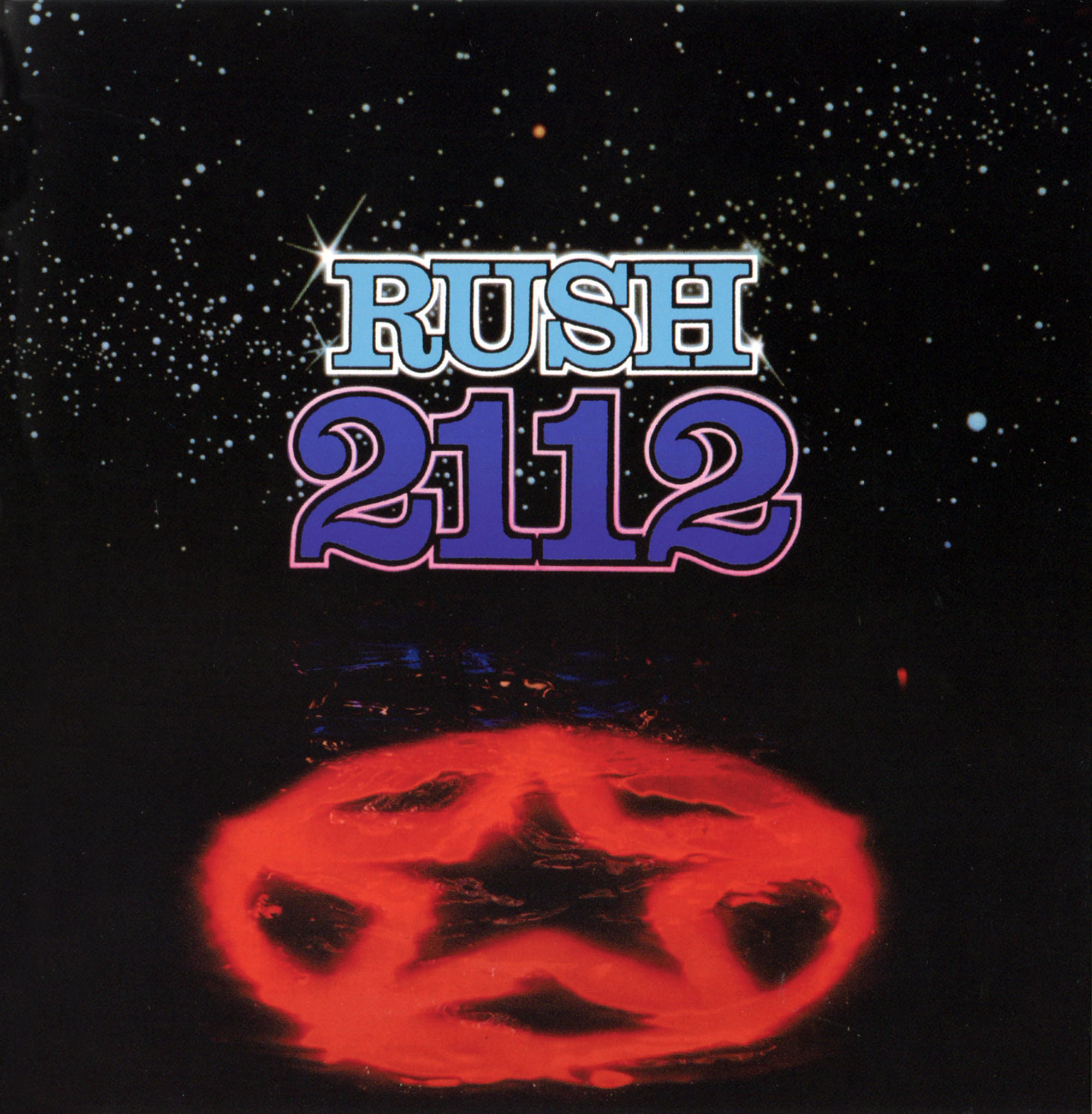 |
| The cover of Rush's 1976 album 2112 |
So, during my long commute to work today, I had a thought. The thought was brought about by the fact that for the last two days, I’ve been listening to Rush’s 2112, A Farewell to Kings, and Hemispheres all in sequence on my ipod (It was free! I won it! I can’t just not use it! proceeds went to AIDS!).
Anywho, the thought was this: why hasn’t anyone tried to jump on the “let’s write a poorly scripted musical based on popular music by a band that everyone loves” bandwagon using the music of multi-platinum Canadian prog-rock power-trio Rush?
Well, I saw “We will Rock You,” the poorly scripted musical based on popular music by Queen about a year ago and was struck by how easily a musical can become a hit by coming up with a pointless plot in order to loosely string together popular songs.
I am inspired by the fact that Rush’s epic songs actually have a plot of their own, courtesy of Neil Pert’s lyrics. I realized that it wouldn’t be too hard to connect the 20 minute “2112″ with the approximately 30 minute “Cyngus X-1″ duology. that’s almost an hour of music right there. Throw in some dialogue, and a couple of other songs and you’ve got yourself a decent musical. So, here, for your pretend-enjoyment, is a mock-up plot synopsis of a hypothetical “2112: the Musical.”
Act I:
The not-so-distant future: Man is on the technological verge of intergalactic space-travel, but no life outside of earth has been discovered as yet. The black hole of Cygnus X-1 in the constellation of Cygnus is found to be sending X-rays through the galaxy. One of the scientists who discovers the rays becomes obsessed with the possibilities of a black hole emitting anything at all, and endeavours to travel to the black hole and investigate. When he gets within distance of the black hole, he is sucked inside, and compressed by the gravity of the vaccuum.
Back on earth, the technological advancement of certain countries has lead to a space-race, spurring international warfare. As the death-toll rises, the world’s artists and visionaries attempt to destroy all advanced technology, fleeing into outerspace in hopes of finding their own private Xanadu (as prophesied by Coleridge?).
Thus ends act one, as the survivors on the planet earth are left without technology, barbarous and chaotic.
Act II:
The year is 2112, and the people of earth have taken what little technology they could salvage and recreated a civilization under the totalitarian rule of the priests of Syrinx, who have built temples everywhere, and eliminated all forms of expression but those they deem acceptable to their plan. One man working in an assembly line escapes his factory and takes refuge in a cave, where he discovers a guitar. Unaware of what it is, he teaches himself to play it, and discovering the power of emotion through music, he realizes that the people of earth (and the solar federation) are missing emotion from their lives. So, he presents his guitar to the Priests, thinking that they will welcome the uniting force of music, but they unexpectedly destroy it, and send him on his way.
He returns to the cave, and in a dream meets an oracle, who shows him a vision of the past, in which an elder race lived happily after travelling to Xanadu, where they’ve continued to explore open-minded behaviours for generations. The oracle says that one day, they will return to destroy the temples of Syrinx. On awaking, the man is so depressed by the state of affairs, believing his dream to be an illusion, that he kills himself. However, as civil wars break out in the solar federation, the elder race returns from Xanadu, alerted by the sound of the guitar, and assumes control of the Solar federation.
The act ends with the outbreak of a war between the passionate elder race, or the Dionysians, and the logical, emotionless people of the Solar Federation, or the Apollineans.
Act III:
As the Apollineans and Dionysians fight, the spirit of the scientist from Act I is sent through the blackhole and through time, back to earth where the people are warring. Seeing the chaos, he cries out for them to stop, and they suddenly realize that they require balance to co-exist. They christen the spirit Cygnus, god of balance, and he teaches them that a balance of heart and mind will mold a new society that is closer to the heart…
The End.
Yep. It’d kick ass.
You get a full cast recording of “Closer to the Heart” as a finale.
Tell me that wouldn’t kick ass.
Yeah, it’d kick ass.
Now, who wants to help me ask the members of Rush to produce?
Monday, May 5, 2008
Album Review: Architecture in Helsinki – “Fingers Crossed”
 |
| Fingers Crossed by Architecture in Helsinki |
I remember I first heard of this band through Amazon’s “You might also like…” pages. I downloaded 3 tracks, just to see what they were like. The songs were, “Imaginary Ordinary,” “Like a Call,” and “Do the Whirlwind.” Two of those songs are on “Fingers Crossed,” and I immediately liked them because they had a childlike playfulness hidden behind their instrumentation and their vocals that was very compelling. (I've since learned that this style is referred to as "twee pop" in some circles).
The first song on the album is an instrumental called “One Heavy February” and as soon as it begins, you can tell you’re going to be in for some short, carefree pieces of music with a sweetness that you can’t help but love. That's just what you get with the entrance of the female vocals on the following track “Souvenirs” coming in with some childlike “lalala” action before segueing into some poetic lyrics that speak nostalgia.
The knuckle-drag of “Scissor Paper Rock” and “To and Fro” are a bit of a let down, after such an upbeat beginning, but the fun returns with the prophetic “Spring 2008″ which works as a good preparation for the bubble and pop of the album’s stand-out track “Owls Go,” a fast-paced, but innocent song, whose verses are peppered with alternating shouts and whispers of “Owls Go!” And with a charmingly deceptive chorus sung by the female vocalist “Finding a replacement with a heart sedated, I’ll forget you/Attic in the basement with a knife serrated, I’ll protect you.” Who knows what it means? It’s oddly sweet.
“Kindling” is another up-beat, building tune, whose tendency for the epic is surprising, considering it’s less than two minutes long. Its horns are powerful. Following “Kindling,” the album seems to wind down, with the slower paced “It’s almost a trap” and “Like a Call,” leading into the beautiful and simple duet “Where you’ve been hiding.”
“City Calm Down” seems like a lullaby, and works as a counterpoint to “Owls Go,” reprising some its musical motifs, and asking us to calm down, before it gains momentum and takes on a symphonic quality, building to a climax that drops off at the end.
The final track “Vanishing” is a favourite of mine, with the simple lyric “Is this a fling? It’s [been] seven days and you’re already vanishing.” It begins in a similar fashion to the album opener, with a bouncy, somewhat optimistic sounding instrumental theme before easing out into a slow, contemplative movement. The question asked in the lyrics forebodes a broken heart, but the music is laced with hope and optimism, as though the question were asked with fingers crossed...
Subscribe to:
Posts (Atom)